.png)
An American Family Torn Apart: The Story of Carlos Della Valle and the Human Cost of Immigration Enforcement

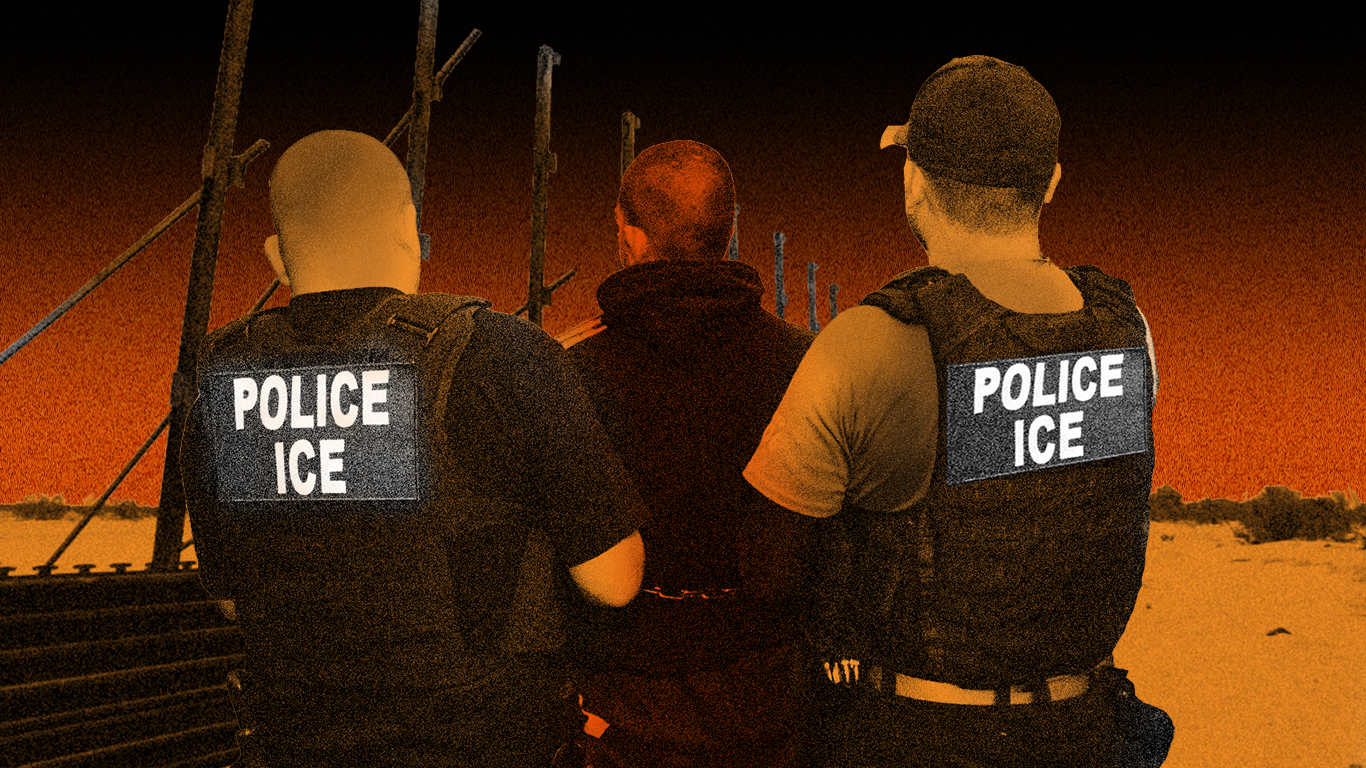
For nearly three decades, Carlos Della Valle lived quietly in a small Pennsylvania borough — paying taxes, raising a son, and building a life with his American wife. Then, on Christmas Day, he disappeared at an airport security checkpoint, and nothing has been the same since.
Carlos, a 49-year-old Mexican national, has spent the last five months bouncing between more than a dozen immigration detention facilities across three states and two U.S. territories. His wife, Angela, a 49-year-old middle school teacher and U.S. citizen, has followed him every step of the way — staying in 21 hotels and rental properties, driving through national forests, and sitting outside detention centers in the scorching sun just to be near him.
Their story puts a human face on one of the most contested issues in America today: what happens to families when immigration enforcement sweeps up people who have no criminal record, deep community roots, and an American family depending on them.
A Life Built Over 28 Years
Carlos grew up in Guerrero, Mexico, a state the U.S. State Department now rates at its highest danger level — "Level 4: Do Not Travel" — due to cartel violence and criminal organizations. Unable to find work and targeted by a local drug cartel after refusing to join, he borrowed money from his grandmother and crossed into the U.S. through Douglas, Arizona, in 1997 with the help of paid smugglers. He was detained and deported, then crossed again — unaware that re-entry after deportation carries a penalty of up to two years in federal prison.
He settled in Chester County, Pennsylvania, near friends of his grandmother. In 1998, he enrolled in an English as a second language class at a local college. His teacher was Angela.
"She noticed his kind smile and how the other students gravitated toward him," according to people familiar with the story. They married in 2002 at the Kennett Square Inn Restaurant and Tavern in Chester County. Young and unaware of the full implications of his immigration status, neither consulted an attorney before the wedding.
The reality of their situation came into focus only after they were already married. The first lawyer they spoke with warned that Carlos might have to leave the country. Rather than give up, the couple spent two decades hoping Congress would pass legislation to help people in their position, and trying to adjust Carlos's immigration status through legal channels.
Carlos kept an extremely low profile. He avoided any situation that might draw attention to himself — not even a traffic ticket. He worked three minutes from home and rose to become a plant manager at an adhesive company. Angela taught middle school. They raised a son, Alessandro, now 20 and a junior at the University of Pittsburgh. Their lives, by every measure, looked like those of any other American family.
Christmas Day Changed Everything
In December 2024, the family took their annual holiday vacation to the U.S. Virgin Islands. On Christmas Day, after hiking the three-mile Mermaid Chair trail on St. Thomas, they headed to the Cyril E. King Airport for a flight back to Miami.
At the TSA screening area, Angela stepped toward the body scanner and turned around. Carlos was gone.
"Where is my husband?" she asked the TSA agents. They did not answer.
Angela sat on a gray metal bench next to the TSA checkpoint for more than six hours, watching other travelers pass through security — many in Christmas pajamas — while dread built in her stomach. She called a lawyer they had previously consulted about Carlos's status.
"He's got this ICE detainer, so the best thing is to ask for him to be sent back," the lawyer told her. "If any lawyer down there says they can get him out, they're going to steal your money. They're going to steal your time."
"That's not acceptable. You're saying not to fight at all?" Angela pushed back.
Around 8 p.m., an immigration agent approached her. "You probably know, but your husband has an old deportation from 1997," he told her. "We have to hold him in custody."
Angela followed the agent inside and spotted Carlos through a cracked office door, seated at a desk. He was about to be moved to an ICE holding facility.
"Do you want to fight?" she shouted to him, with agents listening.
"Yes," he yelled back.
A Jury Said Not Guilty. ICE Said It Didn't Matter.
Two days after Christmas, Angela walked into the federal courthouse in Charlotte Amalie for an emergency hearing. The moment looked bleak — the lawyer they had hired had failed to file necessary paperwork. Then the courtroom doors opened. Federal Public Defender Melanie Turnbull had heard about the case and asked for a recess. By 6 p.m., Carlos was released on a $20,000 bond and allowed to fly home, with an August trial scheduled to determine whether he had illegally re-entered the country.
Eight months later, 20 friends and supporters flew to St. Thomas from Pennsylvania to attend the two-day trial. More than 200 letters from the Chester County community had been submitted to the court. The president of the adhesive company where Carlos worked — a man who had voted for Donald Trump and supported immigration enforcement — wrote that Carlos's life was "exemplary" and that he deserved to remain in the United States.
"I'm sure President Trump had men like Carlos in mind when talking about what the new immigrants will look like. He's not that criminal element that's come here," the company head wrote.
Community members described Carlos as someone who "humbly emulates what it means to be a true human, community member and American" and "the kind of man I hope my sons will be one day."
The jury found Carlos not guilty of illegal reentry.
Before the cheers had faded, an ICE officer pulled Carlos and Angela aside.
"Carlos, I'm sorry," the ICE officer told them. "You are without status, and you're going into detention."
She gave them one last night together. The next morning, Carlos turned himself in.
Transferred More Than a Dozen Times
What followed was a five-month odyssey across the American detention system. From St. Thomas, Carlos was moved to a staging facility in San Juan, Puerto Rico. From there, he was transferred to multiple facilities in Florida — including the Krome North Service Processing Center, the Broward Transitional Center, and the makeshift tent detention site in the Florida Everglades known as "Alligator Alcatraz." He was transferred 10 times within Florida alone before being moved to Winn Correctional Center in Winnfield, Louisiana — a former state prison sitting in the middle of the Kisatchie National Forest that now houses immigration detainees.
"This place is everything they say it is," Carlos told Angela in a call from the Everglades facility, where detainees slept on bunk beds under constant fluorescent lights and reported living in unsanitary conditions.
Angela was always right behind him. When she learned Carlos had been moved to Florida, she flew to Miami and checked into a casino resort on the edge of the Everglades. When she arrived at the Alligator Alcatraz checkpoint, the guard saw her pale face and green eyes and assumed her husband was a staff member. When she explained he was a detainee, she was turned away.
In late September, Carlos was transferred to Winn — part of a region of Louisiana known as "Detention Alley," which houses 14 of the largest immigration detention centers in the country. Federal investigators began looking into Winn in the fall of 2024 after receiving more than 100 allegations of civil rights violations, including a guard demanding a detainee "get down on his knees and beg" for his legal documents, detainees being confined in a freezer, and 200 cell-confined detainees being pepper-sprayed.
Angela rented a home in Natchitoches, Louisiana, about 30 miles from the facility. She drives an hour each way to visit. She goes through two security checkpoints, empties her pockets, submits to a pat-down, and is asked to spread her legs.
She doesn't mind. "She'd wear a chicken suit if she had to," those close to her say.
A Son Growing Up Without His Father
The toll on their son Alessandro has been significant. His junior year at the University of Pittsburgh began without either of his parents helping him move in — something they had always done together. He drove back to campus alone, tried playing music to drown out the emptiness, and said it didn't work.
"It can't get any harder," the 20-year-old thought as he drove back for move-in day of his junior year at the University of Pittsburgh. "Then it gets harder."
For three months, Alessandro did not see his parents. In November, he drove to Louisiana with his mother to visit his father at Winn for the first time. He was startled by the size of the facility — the layers of razor wire, the metal detectors, the sliding iron bars. When Carlos walked into the visitation area, Alessandro broke down crying. His father had lost significant muscle mass and had deep bags under his eyes from sleepless nights.
"It feels like a prison," Alessandro thought as the metal-sliding bars leading to the visitor waiting area slammed behind him.
Father and son held hands for the entire one-hour visit. They talked about school, Alessandro's haircut, his recently rekindled relationship with his ex-girlfriend. Then the hour ended.
The Broader Picture
The Della Valle family is not alone. The Department of Homeland Security estimated in 2024 that approximately 765,000 noncitizens married to U.S. citizens lack lawful immigration status. Many have been married for more than 20 years. These are known as "mixed-status" families.
Under previous administrations, enforcement was generally focused on individuals with criminal records. The current administration has broadened that scope considerably. Being undocumented — regardless of family ties, length of residence, or community contributions — is now treated as sufficient grounds for detention and deportation.
The Biden administration's 2024 "Keep Families Together" program was designed to help people in exactly Carlos's situation adjust their legal status without risking deportation. The program was suspended in November 2024 following legal challenges from Republican-led states, including Florida. Even if it had survived, Carlos's second illegal entry would have complicated his eligibility.
Marielena Hincapié, an immigration scholar at Cornell University who helped shape the Biden program, says the only real solution is for Congress to change federal immigration law.
"These are families who are deeply rooted, who are part of our communities, who are contributing," Hincapié said. "The cruelty, the inhumanity and the complexity of the immigration system are being brought home to local communities in a way that people had never experienced or never understood before."
A Deportation Order and an Ongoing Appeal
In November, a judge held a video hearing on whether Carlos could be deported to Guerrero, Mexico. Carlos told the judge he had been in the U.S. for nearly 28 years and feared being identified as someone with an American family — making him a target for extortion or violence.
"I have a White American wife and son," Carlos told the judge. "They're going to find me. They're going to kill or extort me."
His lawyers submitted news articles and research documenting the violence in Guerrero. In the spring of 2025, 11 bodies were discovered in Tecoanapa, Guerrero, following a clash between criminal groups. In another city in the state, the mayor was beheaded. The U.S. State Department currently advises Americans not to travel to Guerrero at all.
Government lawyers argued the fear of violence was too general to qualify for protection. The judge agreed and reinstated a deportation order. Carlos's lawyers have appealed, and that appeal is still working its way through the courts.
In response to questions about the case, DHS Assistant Secretary Tricia McLaughlin said the Trump "administration is not going to ignore the rule of law" and suggested that "illegal aliens" like Carlos should self-deport and accept a $2,600 incentive, which would give him a "chance to come back to the U.S. the right legal way to live the American dream." The agency did not address the fact that a jury found Carlos not guilty of illegal reentry.
U.S. Rep. Maria Elvira Salazar, a Miami Republican, introduced a bill that would allow immigrants like Carlos — those who have been in the country for more than five years — to apply for legal status. The bill has made little progress since its introduction.
Still Following, Still Fighting
Back in Chester County, the community has not forgotten the Della Valle family. Churches have held vigils. "Bring Carlos Home" signs dot front yards across Downingtown. A GoFundMe campaign has raised more than $90,000 to help Angela follow Carlos from state to state.
Angela lives in a constant state of anxious waiting. Every time her phone rings, she braces for the news that Carlos has been deported. She has a plan for that scenario too: Alessandro finishes school, Angela spends a few weeks in Mexico, then returns to Downingtown to maintain their home.
In the meantime, she helps other detainees' families. When a detainee's commissary account runs low — the funds needed to call family — Carlos sometimes asks Angela to add money to the account. Her presence at detention centers has become well known in immigrant advocacy circles.
A friend of Carlos who was deported from Winn recently sent Angela a message after being reunited with his own family in Mexico.
"Eres una sombra atrás de Carlos y la mejor medicina para él es verse," he told Angela. "You are a shadow behind Carlos, and the best medicine for him is to see you."