.png)
Rural Voters and Farmers Are Turning on Trump — And the Numbers Show It

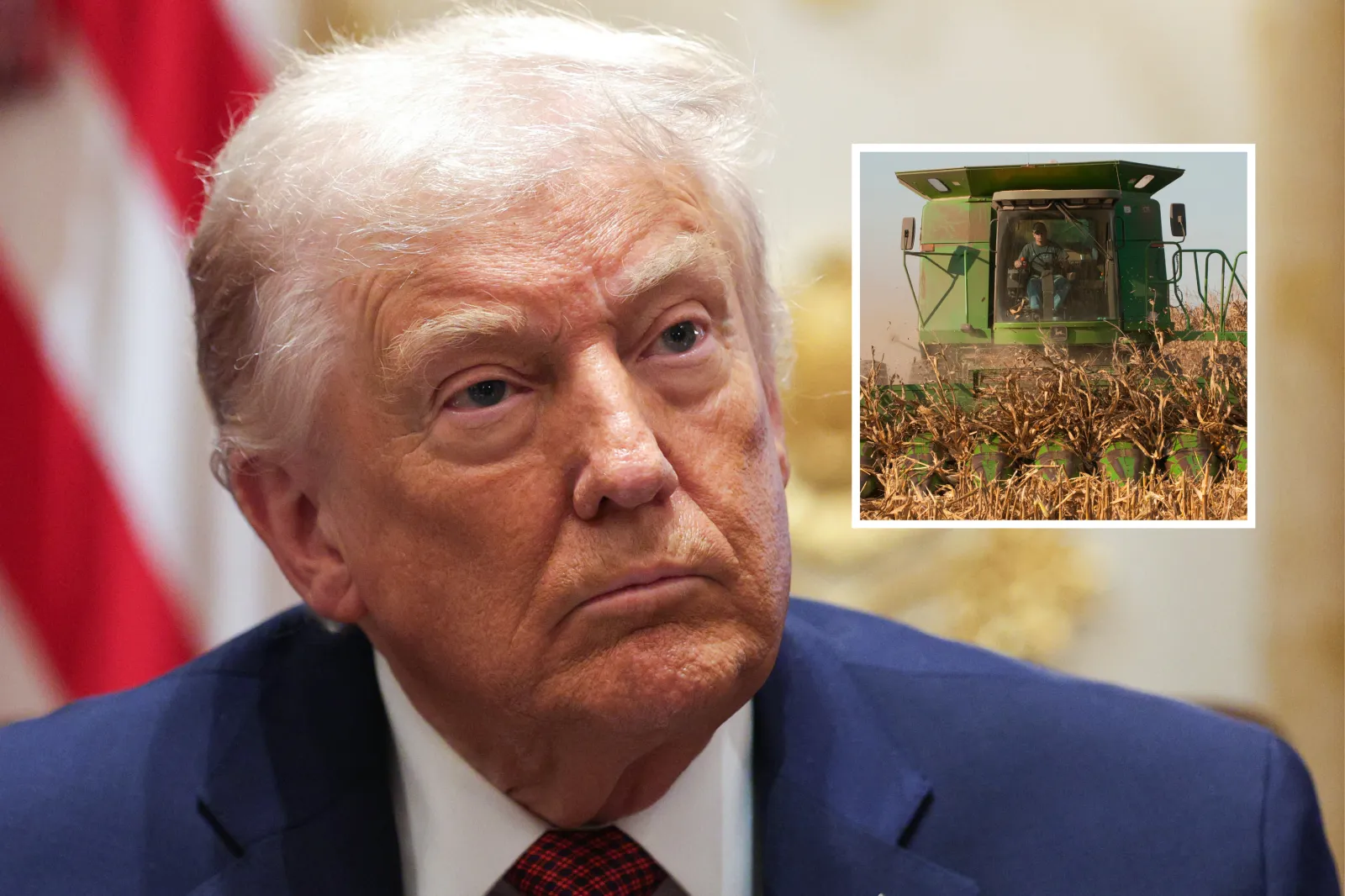
When the people who have supported a president most loyally start pulling back, it's worth paying attention. New polling data shows that rural Americans — a group that has been central to Donald Trump's political success — are now disapproving of the job he's doing at rates that should concern his political team heading into this year's midterm elections.
A Fox News poll conducted May 15–18, 2026, among 1,002 registered voters nationwide found that Trump's net approval rating among rural voters has swung a dramatic 34 points in just over a year — dropping from +20 in early 2025 to -14 in May 2026. That means more rural voters now disapprove of Trump than approve, which is a significant reversal for a group that has long backed him in large numbers. Among rural white voters specifically, the slide is nearly as steep: from +27 to -6 over the same period.
The poll was conducted jointly by Beacon Research, a Democratic-aligned firm, and Shaw & Company Research, a Republican-aligned firm, using a combination of landline calls, cellphone interviews, and online text-to-web surveys. The margin of error is plus or minus 3 percentage points.
What the Numbers Actually Mean
Trump's overall approval rating sits at 39 percent in this poll — just one point above the lowest level recorded in this polling series. But the more telling story is in the details. His base is softening in places it rarely has before.
On the economy, only 29 percent of all voters said they approve of how Trump is handling it, while 71 percent disapprove. Rural voters tracked almost identically: 30 percent approval, 70 percent disapproval. On inflation specifically, just 24 percent of voters overall approve of Trump's handling of the issue — the worst score of any policy area tested in the survey. Among rural voters, that number rises only slightly, to 28 percent approval.
Republican pollster Daron Shaw, who conducts the survey alongside Democratic pollster Chris Anderson, put it plainly.
"Despite consistently strong GOP support, the president's numbers are leaking a bit," Shaw said. "Make no mistake; it's all about affordability. Independents jumped ship in 2025, and now non-MAGA Republicans and other core constituencies are wavering."
Even on border security — one of Trump's strongest issues throughout his political career — the numbers are tightening. Nationally, voters are now split at 49 percent approval to 51 percent disapproval, the first time that issue has gone net negative during this term. Rural voters still lean toward approving of his border policies, 54 to 45 percent, but that cushion is narrower than it once was.
Farmers Are Feeling It Most
Behind the polling shifts is a very real financial crisis hitting American farms. According to the American Farm Bureau Federation, farm bankruptcies rose 46 percent in 2025 compared to the year before. That's not a rounding error — it reflects genuine economic pain spreading across the agricultural sector.
Input costs — the money farmers spend on fuel, fertilizer, and equipment just to grow their crops — have surged sharply. The escalation of conflict involving Iran has pushed energy prices higher, and those higher energy prices feed directly into what it costs to run a farm. Fertilizer prices, which are heavily tied to energy costs, have become a particularly painful pressure point.
Fred Yoder, an Ohio farmer, described the situation in concrete terms in comments shared by Farm Action from an interview with US Farm Report.
"It's costing us about $1,500 of cash per day to run two tractors," he said. "I spent many years buying potash for $90 a ton, and now it's $670 to $700 a ton. Our big problem is the input costs. I haven't seen anything this bad since the 1980s."
Willis Nelson, a Louisiana farmer, described having to cut back on fertilizer use just to stay afloat. "We're not financially able" to operate as normal, Nelson told MS Now, explaining that his family farm simply lacks the margin to maintain normal operations.
"It's tough, you know, very tough on us," Nelson added, as his multigenerational farm faces the prospect of bankruptcy.
Trade dynamics have added another layer of strain. China has reduced its purchases of American agricultural goods, particularly soybeans, leaving many U.S. farmers with weaker prices and fewer places to sell what they grow. Trump's recent trip to Beijing and his comments there — in which he argued against restricting foreign ownership of U.S. farmland, saying such restrictions would lower land values — have unsettled some farmers who are already concerned about foreign control of American agricultural assets.
The White House Pushes Back
Administration officials disputed the significance of the poll results, framing the numbers as a temporary snapshot rather than a meaningful trend.
White House spokesman Kush Desai said the U.S. economy has remained "resilient" under Trump and argued that "as this agenda continues taking effect, and as Congress passes more of the president's healthcare and housing affordability agenda, the best is yet to come in the second Trump term."
Spokesman Davis Ingle pointed to Trump's 2024 election victory as a more meaningful measure of public support, saying "the ultimate poll was November 5th 2024 when nearly 80 million Americans overwhelmingly elected President Trump to deliver on his popular and commonsense agenda."
Ingle added that the administration is "working tirelessly to create jobs, cool inflation, increase housing affordability, and more," and described recent progress as "just the beginning" of what the president's agenda will deliver.
Whether those arguments resonate with farmers watching their costs climb and their margins shrink will likely play out not just in future polls, but in how rural communities show up — or don't — when midterm ballots are cast later this year.