.png)
Pope Leo XIV and Trump Are Clashing — What Americans Need to Know

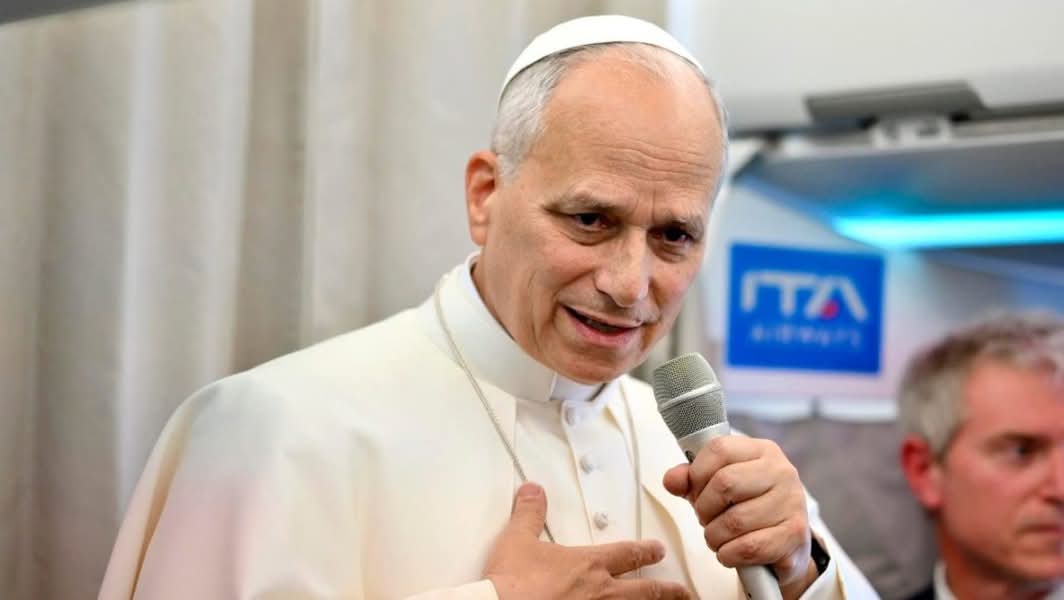
A sitting U.S. president and the leader of the world's 1.4 billion Catholics are in a very public dispute — and the reason behind it may surprise you. The conflict centers not on money, politics, or territorial power, but on the Pope delivering the core teachings of Christianity.
President Donald Trump has called Pope Leo XIV "weak," accused him of being influenced by the "Radical Left," and publicly told him to "focus on being a Great Pope, not a Politician." Vice President JD Vance added to the criticism, saying the Pope should "stick to matters of morality." The Pope's response has been measured but firm — and he says he has no intention of backing down.
Who Is Pope Leo XIV?
Pope Leo XIV, born Robert Francis Prevost, made history on May 8, 2025, when he became the first American-born pope ever elected. His opening words from St. Peter's Balcony gave an early indication of his priorities: "Peace with you all … the first greeting of the risen Christ, the Good Shepherd who gave his life for the flock of God." The following week, speaking to journalists, he quoted directly from the Sermon on the Mount: "Blessed are the peacemakers."
Before his election, Prevost spent years serving as a bishop in Peru, working closely with some of the most impoverished and marginalized communities in Latin America. In 2022, he publicly described Russia's invasion of Ukraine as an "imperialist" act of conquest. In early 2025, as a cardinal, he shared an article that pushed back on Vice President Vance's characterization of Christian love, with the headline reading: "JD Vance is wrong: Jesus doesn't ask us to rank our love for others."
What Sparked the Public Dispute
The conflict intensified over Easter weekend. While President Trump was publicly threatening Iran with military strikes — including what he described as the potential "eradication" of a "whole civilization" — Pope Leo XIV was delivering a Palm Sunday homily at the Vatican. He described Jesus as the "King of Peace," warned that God "does not listen to the prayers of those who wage war," referenced the ongoing conflicts in Ukraine and Gaza, and called Trump's threats against Iran "truly unacceptable."
Trump's reply came swiftly, not through diplomatic channels, but through social media. The public attack drew widespread attention and raised questions about the boundaries between political power and religious leadership.
In his own words, the president made his stance clear: "I don't want a Pope who criticizes the President of the United States because I'm doing exactly what I was elected, IN A LANDSLIDE, to do." Trump also claimed — without any documented evidence — that the Vatican had selected an American pope specifically as a diplomatic move to manage its relationship with the White House, writing that Leo "wasn't on any list to be Pope" before being elevated for that purpose.
The Pope's Response
Speaking to reporters while traveling to Africa, Pope Leo XIV addressed the confrontation directly and without apparent concern for the political fallout. He rejected the idea that his Gospel message and the president's criticism belonged in the same category.
"To put my message on the same plane as what the president has attempted to do here, I think is not understanding what the message of the Gospel is. I'm sorry to hear that, but I will continue on what I believe is the mission of the church in the world today."
When pressed further, he was equally direct: "I'm not afraid of the Trump administration, or of speaking out loudly about the message of the Gospel, which is what the Church works for."
Since taking office, Leo XIV has consistently addressed the conflicts in Gaza and Ukraine through the lens of Christian peace and justice. Notably, he has chosen to speak to the world primarily in Italian and Spanish rather than English — a choice widely interpreted as a deliberate signal that he sees his role as shepherd to a global flock, not as a representative of any single country.
Why This Matters for Americans
For the tens of millions of American Catholics — and for Christians of all denominations — this dispute raises a straightforward question: What is the role of faith leaders when they speak on issues of war, peace, and human suffering?
The Pope has not broken with Catholic tradition or introduced a new theology. Calling for mercy, advocating for peace, and speaking on behalf of civilian populations affected by war have long been understood as central obligations of the Catholic Church. The Sermon on the Mount and the Parable of the Good Samaritan are among the most recognized texts in Christianity.
What makes this moment unusual is not what the Pope is saying. It is that his message — rooted in scripture that has guided Christians for two thousand years — has become the subject of a direct, personal attack from the sitting president of the United States.