.png)
Trump's Iran War Promise Runs Into Hard Reality as Deadline Approaches

President Trump set a bold timeline for ending the war with Iran — two to three weeks — but more than a month into the conflict, that deadline has come and gone with little to show for it. Here is what Americans need to know about where things stand and why it matters for their wallets, their security, and the world.
Trump finds himself in a difficult position of his own making. The goals he publicly set for the war — preventing Iran from obtaining nuclear fuel, helping Iranians overthrow their government, and reopening the Strait of Hormuz to global shipping — have not been achieved. Talks aimed at reaching a deal with Iran have shown little progress, according to analysts tracking the negotiations.
The Speech That Did Not Reassure Markets
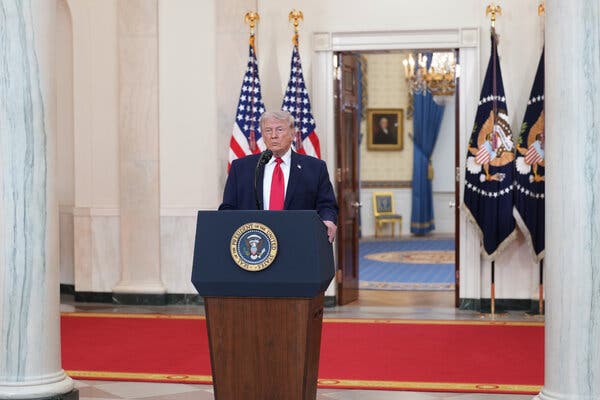
On Wednesday evening, Trump delivered a prime-time televised address intended to calm American anxieties about the war's cost and duration. He told viewers that an end to hostilities was near and that economic life would soon return to normal. The financial markets were not convinced.
Oil prices jumped 8 percent in the hours following his 19-minute speech. The primary reason: Trump offered no concrete plan to resolve the ongoing crisis in the Strait of Hormuz, a critical global shipping lane that has effectively been held hostage during the conflict. Trump said the strait would "open up naturally" once the war ended, but gave no details on how or when that might happen.
The Strait of Hormuz is one of the world's most important waterways for oil shipments. Disruptions there drive up energy prices globally, and American consumers are already feeling the effects at the pump and in the broader economy.
Iran Is Proving More Resilient Than Expected
Despite suffering significant damage to its military arsenal, Iran has continued to fight. In a striking illustration of that resilience, Iran launched missiles at Israel even while Trump was still speaking Wednesday night. American officials had anticipated that Iran's tolerance for sustained military pressure would break sooner than it has.
Trump has threatened to send Iran back to the "Stone Ages" if it refuses to meet his terms — though he did not spell out specifically what those terms are during Wednesday's address. Critics point out that carrying through on that threat would mean escalating the war, not ending it, which directly contradicts his stated goal of winding the conflict down within weeks.
The administration has put forward what observers describe as a range of sometimes conflicting paths forward, leaving it unclear which strategy is actually driving U.S. decision-making. That uncertainty is part of what is fueling anxiety in financial markets and among American allies watching the situation closely.
With Trump's self-imposed deadline already expired by most counts, the central question now is whether the next two to three weeks will produce the breakthrough he has promised — or whether the conflict will drag on with no clear endgame in sight.